Steppe to tundra
Main contributors: Johanna Mård Karlsson, Nicole Reid, Rodrigo Martínez-Peña
Other contributors: Garry Peterson, Juan Carlos Rocha
Last update: 2016-09-15
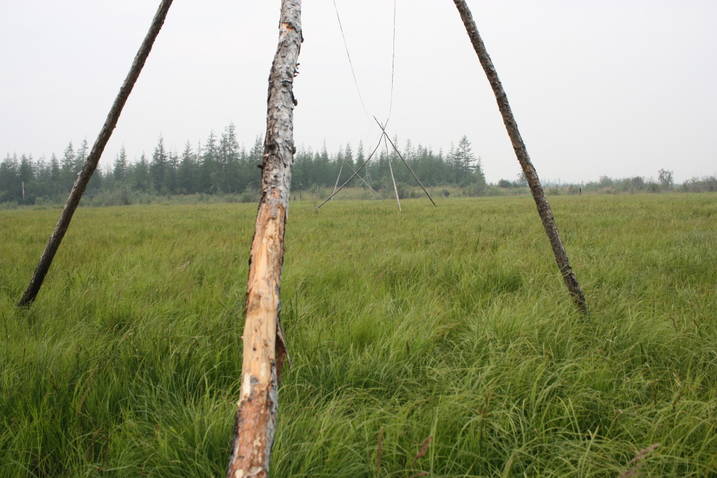
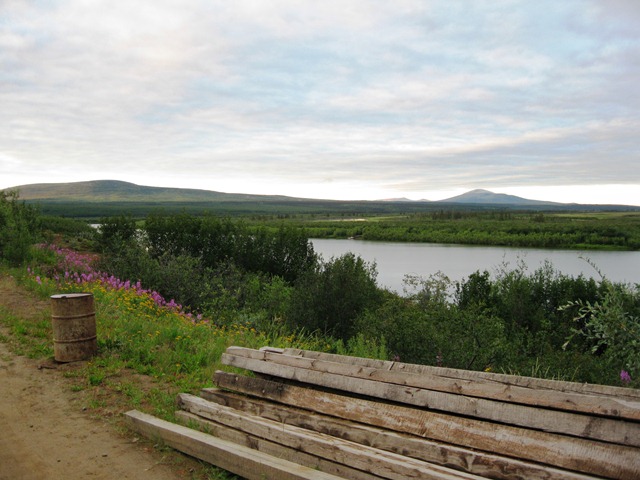
Steppe (a grassland) to tundra (mosses and shrubs growing in waterlogged soils) is a regime shift that can occur in cold terrestrial ecosystems. Tundra and steppe regime shift is typically found where permafrost occurs. Steppe and tundra are primarily found in the Arctic, north of the tree line, where mean temperature below 10-12 C for the warmest month (Jonasson et al. 2000). Climate change and changes in the density of large herbivores are the main drivers of regime shifts between steppe and tundra. Climate changes that reduce soil moisture can favor steppe over tundra, and vice versa. Tundra is favored by moss growth, which is more limited by water than by nutrients. Steppe is favored by grass growth, which is improved by drier soils with available nutrients. Large herbivores can shape ecosystems through their impact on vegetation species composition, soil structure, and ecological dynamics. Large herbivore trampling and grazing can slow moss growth and convert tundra to steppe vegetation. At the end of the last ice age (12,000 yr BP), human hunting greatly reduced populations of large herbivores which may have contributed to a shift from grass-dominated steppe to moss-dominated tundra. In the 21st century, climate change together with the presence of horses, bison, and musk oxen could lead to shifts between steppe and tundra vegetation.
Evidence
Fig 1 | Empirical evidence. The databse currently documents 2 cases of steppe to tundra around the world. Each dot in the map is coded from a scientific article documenting a place undergoing this regime shift. You can learn more from each case by hovering and clicking on the case of interest.
Analysis
General information
Alternative regimes
Steppe
The steppe vegetation coverage is dominated by grasses growing in dry soils (Eroglu et al. 2012). In this regime, herbivores increase nutrient availability by accelerating nutrient cycling. This increases primary production. During the Pleistocene epoch, arctic steppes sustained large grazing herbivores such as mammoths, bison and yaks etc. (Zimov 2005). Today, grasses still sustain reindeer/caribou population. Currently, The steppe communities of Yakutia, Siberia are confined to the terraces above floodplains and south facing slopes of the river valleys (Yurtzev, 1982).
Tundra
The tundra vegetation coverage is dominated by mosses and shrub such as dwarf birches and willows growing in waterlogged soils. The ecosystem has lower primary production and nutrient cycling thus the growth rate is slow. Moss growth is limited by moisture so the moist and nutrient low soil promote and sustain moss growth.
Drivers and causes of the regime shift
Climate and herbivory are the two direct drivers of shifts between steppe and tundra.
Herbivory has caused large-scale vegetation changes across the Arctic (Speed et al., 2009; Bråthen et al., 2007; van der Wal, 2005; Srivastava & Jefferies, 1996). Herbivores trample the vegetation and deposit feces to nutrient limited soils which promotes grass growth sustaining herbivore population. In the absence of herbivory, grass litter increases causing soil moisture to increase which reduces nutrient availability promoting the growth of unpalatable mosses.
Climate can act as a driver by changing air temperatures which is associated with changes in soil moisture. Soil moisture is key component in sustaining moss or grass coverage. Moss growth is more limited by water than by nutrients; however, nutrients are more available in drier soils which promote grass growth. Currently, climate is changing, in the long term whether steppe, tundra or another regime will dominate Arctic ecosystems in uncertain.
Impacts on ecosystem services and human well-being
Steppe to tundra
Shifting from steppe to tundra had a great impact on provision of food for Pleistocene hunters as megafauna declined. Nonetheless, tundra currently provides ecosystem services. At local level, thermal insulation of the tundra prevents permafrost melting, which prevents destabilization and collapse of infrastructure (Schaefer 2012); tourism is also a cultural ecosystem service provided at this level.
At regional level, wellbeing of nomadic indigenous peoples such as Nenets, Enets, Sami, Nganasans and Selkups, are connected to Arctic that provide opportunities for grazing and food sources, as well as ecosystems that co-produce cultural ecosystem services i.e. production and conservation of indigenous knowledge, practices and believes, as well as production of scientific knowledge (Huntington 2013).
At global level, increasing air temperature due to climate change deepens the active layer of permafrost. However, soils covered by moss, permafrost is less susceptible to degradation (Ivanova 2003), this ecosystem service is essential since permafrost contains almost twice as much carbon as the atmosphere today and its effects would be irreversible at human time scale (Schaefer et al. 2012).
Tundra to steppe
Arctic soils covered by mosses, permafrost is less susceptible to degradation (Ivanova 2003). Transition from tundra to steppe implies loss of this buffering layer. Consequence, the following ecosystem services will be impacted:
Water availability. Local and regional freshwater dynamics will change leading to a decline in the number of lakes and wetlands (Wrona et al. 2016; Schaefer 2012).
Livestock production. Increased abundance of grassland, steppe might benefit both reindeer hunters and herders.
Protection from infrastructure destabilization. Pipelines, railways and power lines across the arctic are built on solid ground provided by the permafrost that if degraded their stability might be lost. This might cause economic costs and serious ecological damages (Schaefer, 2012).
Fire regulation. As moss tundra shifts to a drier regime, possibilities of wild fires will increase, which contributes to thermal erosion of permafrost (Schaefer, 2012).
Prevention of climate change. Permafrost degradation turns permafrost’s carbon stock into a carbon source, which would accelerate climate change (Schuur et al. 2015). Loss of this ecosystem service impacts the global level, since permafrost contains twice as much carbon as the atmosphere and effects of release is irreversible at human time scale (Schaefer, 2012).
Cultural ecosystem services. Conservation of indigenous knowledge, practices and believes related to tundra would be lost, affecting the well being of t he Nenets, Enets, Sami, Nganasans and Selkups (Huntington, 2013).
Management options
Preventing tundra-steppe regime shift
Global temperatures rise as consequence of green house gasses emission. A large part of the world’s soil-bound carbon is in the tundra areas, where the organic carbon is mainly locked up in frozen soil (permafrost). If the greenhouse gas-induced warming continues, permafrost will thaw (ACIA, 2004). Moss-tundra regime is highly desirable since it helps maintaining low subsoil temperatures (Ivanova 2003). This is important, because when the soil thaws in the summer, organic matter decomposes, and methane and carbon dioxide emissions are released to the atmosphere. This could result in a positive feedback loop, where warming increases the release of greenhouse gas emissions. Preventing the initiation of this feedback loop will help reduce global climate change and should be an important goal of the management arctic ecosystems (Schaefer et al. 2012).
To prevent this regime shift, greenhouse gas emissions must be reduced in order to avoid the effects of climate change. The planetary boundary value for atmospheric CO2 concentration is 350 ppm above pre-industrial level (Rockstrom et al. 2009). This was further supported by the COP21 agreement, a sign treaty, to limit temperature increase to 1.5 degrees Celsius compared to pre-industrial levels. These efforts are not enough to prevent the feedback loop, eliminating emission is the only solution. In the Artic, land management strategies can address feedback loop on the local level. In a study, by Post and Pederson (2008), a 5-year experimental investigation of Arctic plant community response to warming, showed that warming under continuous grazing pressure from muskoxen did not differ from plant composition without warming suggest that management of large herbivores may be an important aspect for mitigating ecosystem response to future climate change
Supporting tundra-steppe regime shift
Attempts are being made today to restore the Pleistocene steppe ecosystem on a limited spatial extent in Siberia. Sergey Zimov’s Pleistonce Park, 160 km2, attempts to reestablish the steppe ecosystem by reintroducing megafauna to Northern Siberia (Republic of Yakutia). Zimov (2005) and colleagues tried to test if the ’key-herbivore´ hypothesis can be verified, as today’s Holocene climate should be optimal for the Pleistocene steppe vegetation. The megafauna consisting of reindeer, moose, Yakutian horses, musk oxen and bison would influence the vegetation and soil composition, by trampling on grassland and returning nutrients to the soil through their manure (Zimov 2005). The grass root systems stabilize the soil and trampling reduces the albedo, exposing ground to colder temperatures, both would prevent permafrost from melting.
In-depth analysis
Feedback mechanisms
Tundra Regime
Herbivore density – moss coverage mechanism (local, well-established) (R3):Mosses are susceptible to trampling, a disturbance, by large herbivores. Moss coverage increases in the presence of low herbivore density (van der Wal 2001). Herbivore density is maintained below carrying capacity since moss are low in nutrients and palatability. Moss dominated sites are avoided by herbivores (Wolff 1980).
Moss coverage – soil moisture mechanism (local, well-established) (R4): The lack of root system prevents water up take from soils by transpiration and dense moss layer decreases evaporation therefore increasing soil moisture. The combination of low evapotranspiration rates and low soil temperature allows the development of water-logged soils (Zimov 1995), which maintains conditions for moss-dominated vegetation. Water-logged soils combined with low soil temperatures reduce decomposition rates of dead matter, so nutrient availability is low within the system.
Moss coverage – land availability mechanism (regional, well-established) (B2): Moss create a local environmental conditions that exclude grasses. Moss coverage is spatially limited within Arctic ecosystem, so land availability within the Arctic serves as a natural boundary. Competition for available land space will naturally limit moss coverage. The Arctic tundra landscape is a microrelief characterized by mounds and depressions influenced by specific combination of microclimate patterns such as moisture, temperature, light, wind exposure and snow coverage
Moss-Permafrost (local, well-established) (B4): Moist conditions promote moss coverage. Moss coverage insulates the soil and therefore reduces permafrost thawing (Kelley et al. 2004); in addition to that, moss prevents evaporation (Zimov et al. 1995), both of which promote soil moisture. In spite of moss cover, air temperature rising – due to climate change – can increase the depth of permafrost’s active layer. When it happens, thawing provides water, which maintains moist conditions for mosses that then prevents accelerated evaporation and progressive active layer deepening (Tenhunen et al. 1992).
Water-Permafrost (local, well-established) (R4):Permafrost thawing can cause accumulation of water. These impounded places are more susceptible to increasing of air temperatures and have a bigger impact on permafrost degradation (Jorgenson et al. 2006).
Steppe Regime
Grass coverage mechanism – nutrient availability (local, well-established) (R2): Grasses are highly productive with high evapotranspiration rates, which decrease soil moisture, creating drier soils (Zimov 1995). Dry soil conditions (thawing of the active layer) increase nutrient cycling including nitrogen availability, promoting fertile landscape for grasses (Nadelhoffer et al.) Furthermore, grasses can shade out or physically smothers mosses, which leads to decline moss abundance (Chapin et al. 1995).
Grass coverage – land availability (regional, well-established) (B3): Grasses create a local environmental conditions that exclude mosses. The Arctic environment serves as a natural boundary for grass coverage. Competition for available land space will naturally limit grass coverage and the carrying capacity of herbivores.
Herbivore density - grass coverage (local, well-established) (R1): Herbivores accelerate nutrient cycling in grassland, and can also import nutrients, through their feces and death (decomposition). Grass growth is stimulated by nutrient inputs and grazing (Zimov, 1995). Grasses dominated areas attract herbivores, because they are better to eat than moss.
Herbivore density – grass coverage mechanism (local, well-established) (B1): Nutrient rich grasses are highly palatable by herbivores.Grazing pressure by herbivores decreases the grass density. Grasses compensate by increasing primary production, through overcompensation grasses may maintain dominance under grazing at fertile sites (Bråthen et al. 2007).
Climate-Permafrost (regional, well-established) (R5): Increasing of air temperature has been associated with permafrost warming (Jorgensen et al. 2006). Thawed permafrost increases soil moisture through melting ground ice (Natali et al. 2015). Soil moisture increase permafrost degradation as accumulation of surface water affects heat flux in to soils and promotes increase thawing (Jorgensen et al. 2010). Exposing previously frozen carbon to microbal processes, CO2 and CH4, shifting the permafrost function from a carbon sink to a carbon source (Hollesen et al., 2011). The thawing of permafrost contributes to greenhouse gas emission. Over time but not abruptly, the emission released is one of the factors that lead to global warming (Schuur et al. 2015).
Drivers
Steppe to Tundra regime
External driver
Climate change (global, uncertain): Climate change from arid to humid during the shift between the Pleistocene and Holocene epoch. Megafuana survived the climate shift into Holocene. Bison, horses and muskoxen continued to graze on the steppe, maintaining the grassland.
Internal direct driver
Decline in Herbivory (local, well-established): Scientists explained disappeared of animals in northern grasslands coincides with human hunting during (Zimov 1995). Herbivore feces inputs, grazing, and trampling maintained the steppe coverage. In the absence of herbivory, grass litter accumulated on the soil surface insulating the soil. In turn, soil fertility declined along with increasing soil moisture created suitable habitat for moss expansion.
There is an uncertainty if climate change alone leads to a shift from productive steppe to less productive tundra. Similar climate shift occurred in previous interglacial periods, yet these did not cause catastrophic landscape reconstructions. It is difficult to disentangle the combine effects of decline herbivory and climate change on the steppe landscape, since they both overlap.
Tundra to Steppe regime
External direct driver
Climate change (global, well-established): This driver affects soil moisture. Moist conditions promote moss coverage. Moss coverage insulates the soil and therefore reduces permafrost thawing; in addition to that, moss prevents evaporation. If air temp increases and permafrost thaws, it will provide moist conditions for grasses, hence mosses create a buffer effect against thawing.
Internal direct driver
Increase in Herbivory (local, well-established): Herbivores trample the mosses, increasing evaporation rates which can cause soil moisture to decline. Drying soil and herbivore dropping can increase nutrients available for the establishment of grasses.
Slow internal system changes
Nutrient availability (local, well-established): Assimilation/Mineralization of nutrients (nitrogen and phosphorus) is a slow process that is regulated by soil temperatures and excrement supply from herbivores. When condition are optimal (elevated soil temperatures and low moisture during the short summer) nutrients become available for grasses. Another temporal delay occurs in herbivore reproduction cycle, time between generations.
Summary of Drivers # Driver (Name) Type (Direct, Indirect, Internal, Shock) Scale (local, regional, global) Uncertainty (speculative, proposed, well-established) 1 Climate change Direct Global Uncertain 2 Herbivory Direct Local Well-established Key thresholds
Shift from Tundra to Steppe
Soil Moisture: There is a tipping point between moss and grasses that is controlled by soil moisture.
Herbivore Density: Can impact soil moisture. Herbivores trample the mosses, and if trampling is dense and frequent enough evaporation rates increase and soil moisture declines causing soil to dry. As a result, soil nutrients are available for grass growth. As herbivore density increases nutrient level in the soil increase by feces deposition. Moss growth is limited by trampling opening spaces for grass colonization.
Shift from Steppe to Tundra
Soil Moisture: The threshold is when conditions shift from dry soils to waterlogged. In the absence of herbivores, plant litter accumulates on the soil surface insulating the soil increasing soil moisture. As a result, soil fertility declines creating suitable moss habitat. Mosses are more limited by moisture than nutrients
Herbivore Density: At low herbivore densities moss can outcompete grasses. The nutrient poor mosses are unpalatable for herbivores. An area dominated by mosses is not attractive for herbivores who will graze elsewhere.
Leverage points
Soil moisture (regional, well-established) is a crucial leverage point in maintaining mosses or grasses. Vegetation growth rates depend on soil moisture; mosses require waterlogged soils whereas grasses need dry conditions. Global warming, as a driver, directly affects soil moisture. A change in soil moisture induces a succession between the two vegetation types. Air temperature increases causing evaporation and promoting dry soils. Moss system shifts from mosses to grasses; however, in grass systems, grass growth is reinforced by drier conditions. Soil moisture is a defining variable in grass versus moss coverage reinforcing loop.
The mineralization (local, well-established) is an important process in the nutrient limited Arctic system. The delay occurs in nutrient assimilation from organic to inorganic, creating the stock of nutrient available in the soil. The process is critical for grass growth which maintains large herbivores populations (mosses are unpalatable to them). Large herbivores carrying capacity is sustained by grass coverage, which depends on nutrient availability. Mineralization is delayed by long winters, which is a temporal delay. Another temporal delay occurs in herbivore reproduction cycle, this is time between generations.
Summary of Ecosystem Service impacts on different User Groups References (if available) Provisioning Services Freshwater +/- Wrona et al. 2016 Food Crops Feed, Fuel and Fibre Crops Livestock +/- Huntington, 2013 Fisheries Wild Food & Products +/- Huntington, 2013 Timber Woodfuel Hydropower Regulating Services Air Quality Regulation Climate Regulation - Schuur et al. 2015 Ivanova, 2003 Water Purification Soil Erosion Regulation Pest & Disease Regulation Pollination Protection against Natural Hazards - Schaefer, 2012 Cultural Services Recreation - Huntington, 2013 Aesthetic Values - Huntington, 2013 Cognitive & Educational - Huntington, 2013 Spiritual & Inspirational - Huntington, 2013 Uncertainties and unresolved issues
Vegetation assemblages at local and regional scale in the arctic depends on various variables such a relief, thickness of the permafrost layer, soil type, etc. In addition to that, vegetation stabilizes feedbacks with air and subsoil temperatures as with animals. How this complex system will look in the face of climate change is a question that still requires large research efforts.
Vegetation dynamics interact with other processes such as climate, water dynamics (draining, lake formation), relief changes and anthropogenic impacts (mining, oiling and herding). There is a knowledge gap regarding these interactions, which is necessary to answer questions such as “will mosses could be replaced by other species if temperature raises?” or “what is the effect of toxic substances releasing in moss and grass communities?”
Categorical summary
Impacts
Ecosystem type:’
- Tundra
Key ecosystem processes:
- Primary production
- Nutrient cycling
Biodiversity:
- Biodiversity
Provisioning services:
- Freshwater
- Livestock
- Wild animal and plant products
Regulating services:
- Climate regulation
Cultural services:
- Recreation
- Aesthetic values
- Knowledge and educational values
- Spiritual and religious
Human well-being:
- Food and nutrition or Health (e.g. toxins or disease) or Livelihoods and economic activity or Security of housing & infrastructure or Cultural or Aesthetic and recreational values or Social conflict
Links to other regime shifts:
- Tundra to forest
- Arctic sea-ice loss
- Greenland ice sheet collapse
- Peatland transitions
Drivers
Key drivers:
- Harvest and resource consumption or Species introduction or removal or Global climate change
Land use:
- Extensive livestock production (natural rangelands)
Key attributes
Spatial scale:
- Sub-continental (e.g. southern Africa or Amazon basin)
Time scale:
- Years
- Decades
Reversibility:
- Hysteretic (difficult to reverse)
Evidence:
- Models
- Paleo-observation
- Contemporary observations
- Experiments
Confidence: existence of the regime shift
- Well established – Wide agreement in the literature that the RS exists
Confidence: mechanisms underlying the regime shift
- Contested – Multiple proposed mechanisms, reasonable evidence both for and against different mechanisms
References
References old [Delete]
- ACIA. Impacts of a Warming Arctic: Arctic Climate Impacts
Assessment. Cambridge University Press. 2004.
- Bråthen, KA, RA Ims, NG Yoccoz, P Fauchald, T Tvereaa, VH Hausner.
2007. Induced shift in ecosystem productivity? Extensive scale effects
of abundant large herbivores. Ecosystems 10:773-789.
- Chapin, F.S., 2005. Role of Land-Surface Changes in Arctic Summer
Warming. Science, 310(5748), pp.657–660.
- Eroglu S., Toprak S., Urgan O, MD, Ozge E. Onur, MD, Arzu Denizbasi, MD, Haldun Akoglu, MD, Cigdem Ozpolat, MD, Ebru Akoglu, M., 2012. Far North: Plant Biodiversity and Ecology of Yakutia,
- Folke, C. et al., 2004. Regime Shifts , Resilience , in Ecosystem Management. Annual Review of Ecology, Evolution, and Systematics, 35(May), pp.557–581.
- Hollesen, JB, B Elberling and PE Jansson. 2011. Future active layer dynamics and carbon dioxide prodcution from thawing permafrost layers in Northeast Greenland. Global Change Biology, 17(2) 911-926
- Huntington, H. P. 2013. Chapter 18 Provisioning and cultural services. In: Meltofte, H. (ed). Arctic Biodiversity Assessment. Status and trends in Arctic biodiversity. Conservation of Arctic Flora and Fauna, Akureyri. pp. 593 - 626.
- Ivanova, R., 2003. Seasonal thawing of soils in the Yana River
valley, northern Yakutia. , pp.7–10.
- Jonasson, S, TV Callaghan, GR Shaver, and LA Nielsen. 2000. Arctic
terrestrial ecosystems and ecosystem function. In M. Nuttall and TV
Callaghan ed. The Arctic, Environment, People, Policy 275-313 Hardwood
academic Publishers Newark.
- Jorgenson, M.T., YL Shur, and ER Pullman. 2006. Abrupt increase in permafrost degradation in Arctic Alaska, Geophysical Research Letters. 33, LO2503
- Karlsson, JM, A. Bring, GD Peterson, LJ Gordon, G Destouni. 2011. Opportunities and limitations to detect climate-related regime shifts in inland Arctic ecosystems through eco-hydrological monitoring. Environmental Research Letter 6
- Nadelhoffer, KJ, AE Giblin, GR Shaver and JA Laundre. 1991. Effects
of temperature and substrata quality on element mineralization in six
arctic soils Ecology 72: 242-253
- Natali, SM, EAG Shuur, M Mauritz, JD Schade, G. Celis, KG Crummer, C Johnston, J Krapek, E Pegoraro and VG Salmon and EE Webb. 2015. Permafrost thaw and soil moisture driving CO2 and CH4 release from upland tundra, Journal Geophysical Research: Biogeosciences, 120, 525-537
- Post, E. and C Pedersen., 2008. Opposing plant community responses to warming with and without herbivores. Proceedings of the National Academy of Sciences of the United States of America, 105(34), pp.12353–12358.
- Rockström J. et al. 2009. Planetary Boundaries: Exploring the Safe Operating Space for Humanity. Ecology and Society 14(2),32.
- Schuur, E. and J. Bockheim, 2008. Vulnerability of permafrost carbon
to climate change: Implications for the global carbon cycle. BioScience,
58(September), pp.701–714.
- Schuur, E.A.G. et al., 2015. Climate change and the permafrost carbon feedback. Nature, 520, pp.171–179.
- Shaver, GR and FS Chapin III. 1986. Effect of fertilizer on production and biomass of tussock tundra, Alaska, U.S.A Arctic and Alpine Research 18 3:261-268.
- Skre, O and WC Oechel. 1979. Moss production in a black spruce Picea mariana forest with permafrost near Fairbanks, Alaska, as compared with two permafrost-free stands. Holarctic Ecology 2:249-254.
- Van der Wal, R and RW Brooker. 2004. Mosses mediate grazer impacts on grass abundance in arctic ecosystem. Functional Ecology 18:77-86.
- Welker JM, Fahnestock JT, and Jones MH. 2000. Annual CO, flux from
dry and moist arctic tundra: Field responses to increases in summer
temperature and winter snow depth. Climatic Change
44(1-2),139-150.
- Wolff, JO. 1980. The role of habitat patchiness in the population dynamics of snowshoe hares. Ecological Monographs 50:111-129.
- Wrona, FJ, M Johansson, JM Culp, A Jenkins, J Mård, IH Myers-Smith, TD Prowse, WF Vincent, and P.A. Wookey
- Zeng, H., G Jia, and BC Forbes. 2013. Shifts in Arctic phenology in response to climate and anthropogenic factors as detected from multiple satellite time series. Environmental Research Letter 8
- Zimov, A.S.A. VI Chuprynin, AP Orshko, FS Chapin III, JF Reynolds, and MC Chapin, 1995. Steppe-Tundra Transition?: A Herbivore-Driven Biome Shift at the End of the Pleistocene Published by?: The University of Chicago Press for The American Society of Naturalists , 146(5), pp.765–794.
- Zimov, S.A., 2005. Pleistocene Park?: Return of the Mammoth ’ s Ecosystem. Science, 308, pp.796–798.
Citation
Acknowledge this review as:
Johanna Mård Karlsson, Nicole Reid, Rodrigo Martínez-Peña, Garry Peterson, Juan Carlos Rocha. Steppe to tundra. In: Regime Shift Database, www.regimeshifts.org. Last revised: 2016-09-15BibTeX citation:
@misc{
  author = {Johanna Mård Karlsson and Nicole Reid and Rodrigo Martínez-PeñaGarry Peterson and Juan Carlos Rocha},
  title = {Steppe to tundra},
  url = {www.regimeshifts.org},
  howpublished = {Regime Shifts Database},
  publisher = {Stockholm Resilience Centre},
  institution = {Stockholm University}
}
This work is licensed under CC BY-NC-SA 4.0


 . It is an initiative lead by the Stockholm Resilience Centre. The website was developed by Juan Rocha and build with Rmarkdown.