Coral transitions
Main contributors: Juan Carlos Rocha
Other contributors: Reinette (Oonsie) Biggs, Garry Peterson, Albert Norström
Last update: 2011-02-25
Regime shifts in coral reefs typically involve a change in species dominance from hard corals (3D structure) to algal dominance. Less commonly documented shifts include shifts from hard corals to soft coral dominance, corallimorpharians, urchin barrens or sponge dominance. All of these regime shifts result in loss of diversity and structural complexity, and are typically triggered by a combination overfishing, pollution, diseases and climate change. Loss of biodiversity and coral bleaching make coral systems more vulnerable to such stressors.
Evidence
Fig 1 | Empirical evidence. The databse currently documents 216 cases of coral transitions around the world. Each dot in the map is coded from a scientific article documenting a place undergoing this regime shift. You can learn more from each case by hovering and clicking on the case of interest.
Analysis
General information
Alternative regimes
Regime shifts in coral systems are usually associated with a change in the species dominance of this ecological community, and consequent changes in the ecosystem structure. Coral reefs are marine ecosystems, three-dimensional shallow-water structures dominated by sclearactinean or hard corals(Bellwood et al. 2004). The most well documented regime shifts entail shifts from hard coral to fleshy seaweed (macroalgae) dominance. However, shifts from hard coral to corallimorpharians dominance, soft coral dominance, sponge dominance, and urchin barrens states have also been documented(Norström et al. 2009).
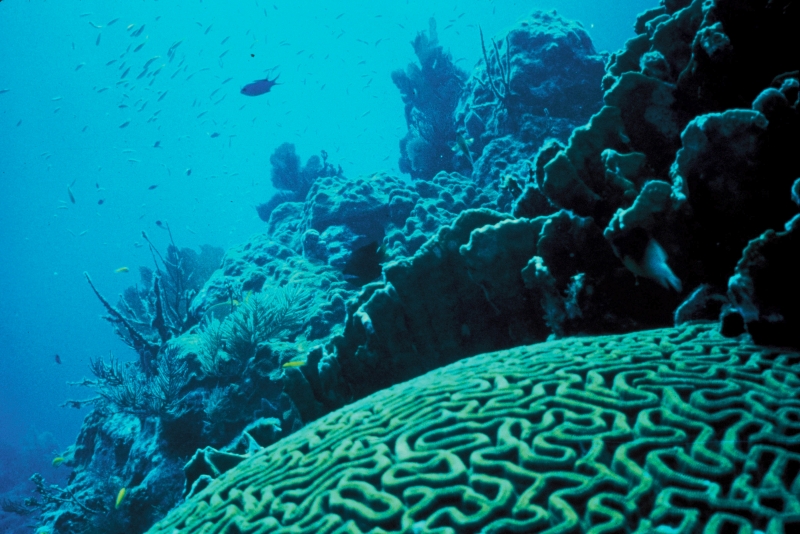
Coral dominated reefs
Corals reefs are marine communities considered one of the most biodiverse and economically important ecosystems on the planet(Hoegh-Guldberg et al. 2007). Coral reefs are old calcareous tridimensional structures created by corals - coral polyps colonies in symbiosis with microscopic algae. This regime implies high biodiversity and three dimensional habitat complexity that offer shelter to other species.
Coral reefs occupy less than 0.5% of ocean floor but sustain up to 25% of marine biodiversity, and produce at least 10% of fish consumed by humans(Moberg and Folke 1999). Due to their three dimensional structure coral reefs host up to 60 000 species of plants and animals(Moberg and Folke 1999); and this rich diversity makes coral reefs a target for tourism. In over 100 countries, coral reefs are major natural and economic resources(Goreau and Hayes 1994). For example, coral reefs are one of the major attractions in the Carribean. In that region tourism is a major source of foreign currency. In some Carribean countries tourism accounts for up to half of nation’s gross domestic product(Hoegh-Guldberg et al. 2007).
Coral reefs can also reduce coastal erosion by reducing the impact of ocean currents and waves. Consquently, intact coral reefs protect coastal infrastructure and valuable sandy beaches. Furthermore, increases in erosion can result in the degradation or loss of other coastal ecosystems such as mangroves and sea-grasses areas, which provide valuable ecosystem services such as fish nurseries(Moberg and Folke 1999, Hoegh-Guldberg et al. 2007).
Algae dominated reefs
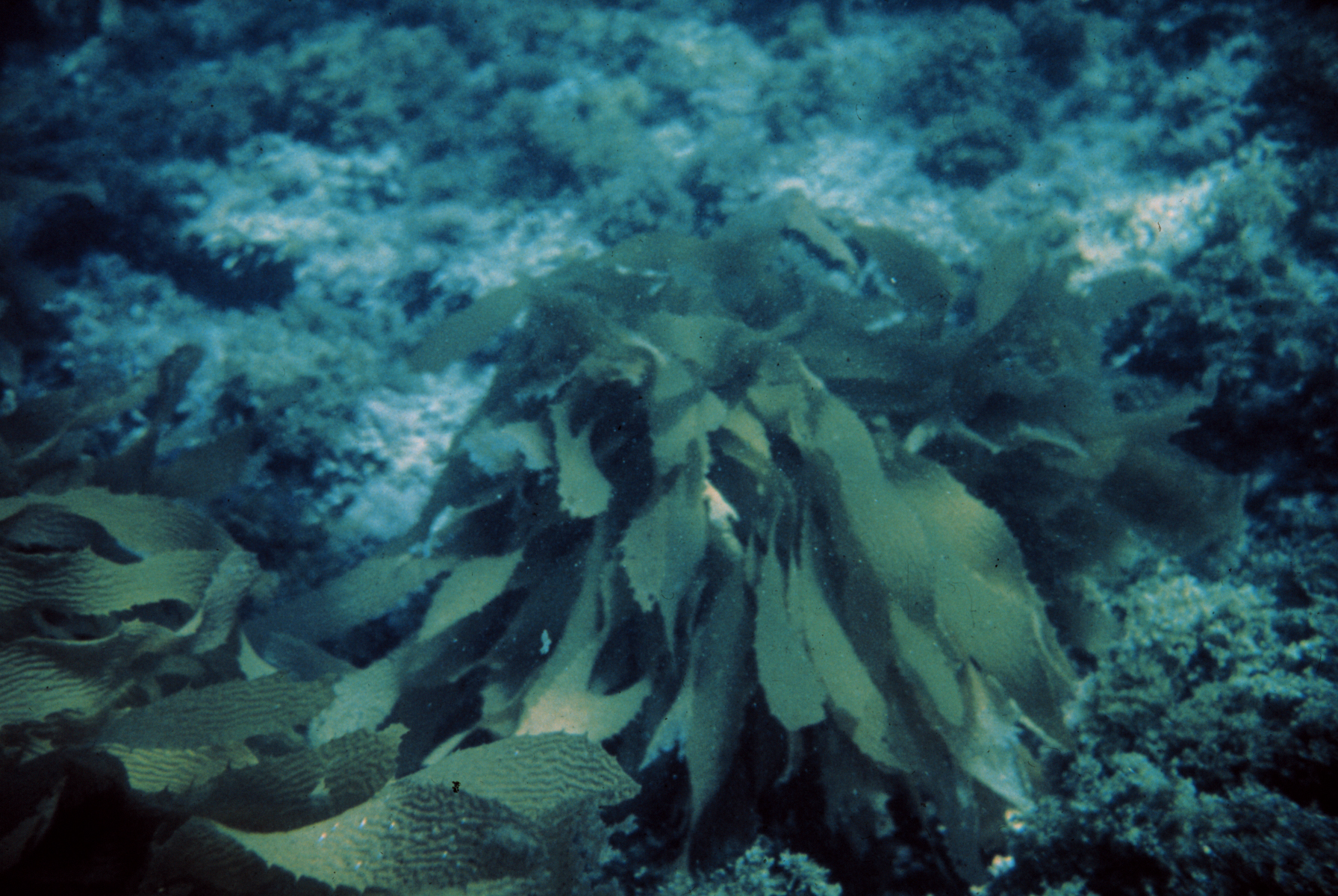
Algae dominated benthos appear when algae overgrow corals. Submarine algal emerge and reduce coral growth, eventually leading to the loss of the habitat complexity of coral reefs(Bellwood et al. 2004). Algae dominated reefs have lower biodiversity, fish production, and provide less protection from coastal erosion. There is also less primary production on algae dominated reefs(Moberg and Folke 1999).
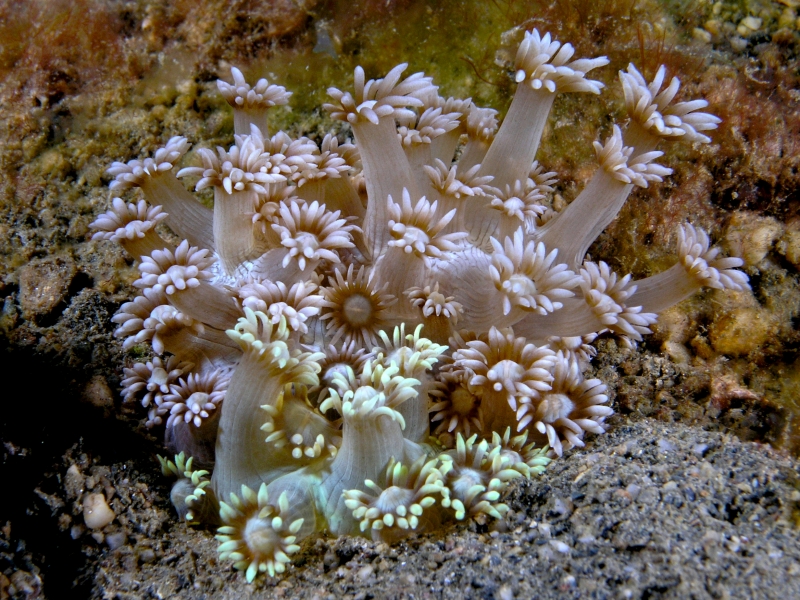
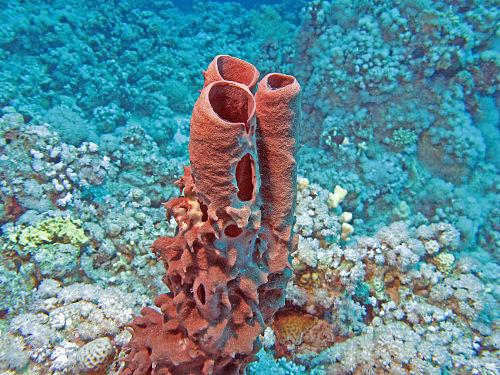
Coralimorpharians, soft corals and sponges.
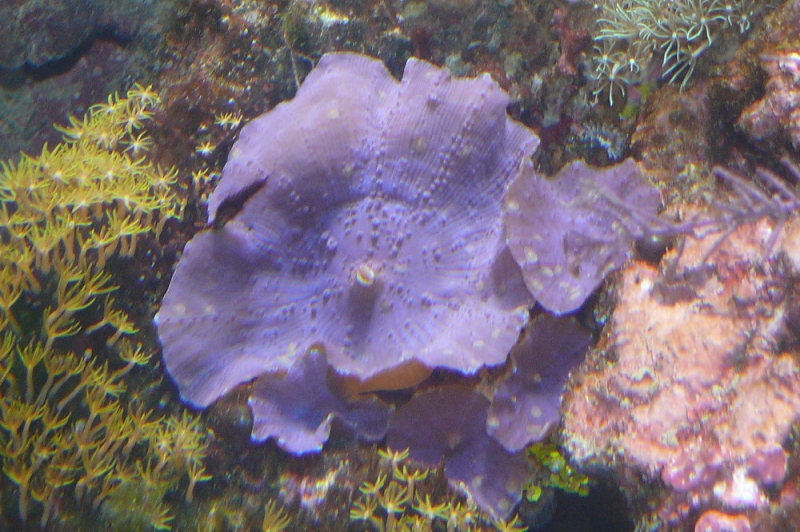
Although less documented, other regimes can dominate former coral reefs when dramatically disturbed (Bruno et al. 2009, Norström et al. 2009). Norström et a. (2009)reports that system dominated by coralimorpharians, soft corals, and sponges are alternative regimes where coral patches can fall when strongly disturbed. Corallimorpharians, soft corals and sponges are thought to reduce habitat complexity and hence biodiversity. Thus, one may expect to see fisheries production and tourism services reduced. However, because such systems are not well studied it is unclear to what extent the ecosystem services provided by coral reefs are reduced.
Urchin barrens
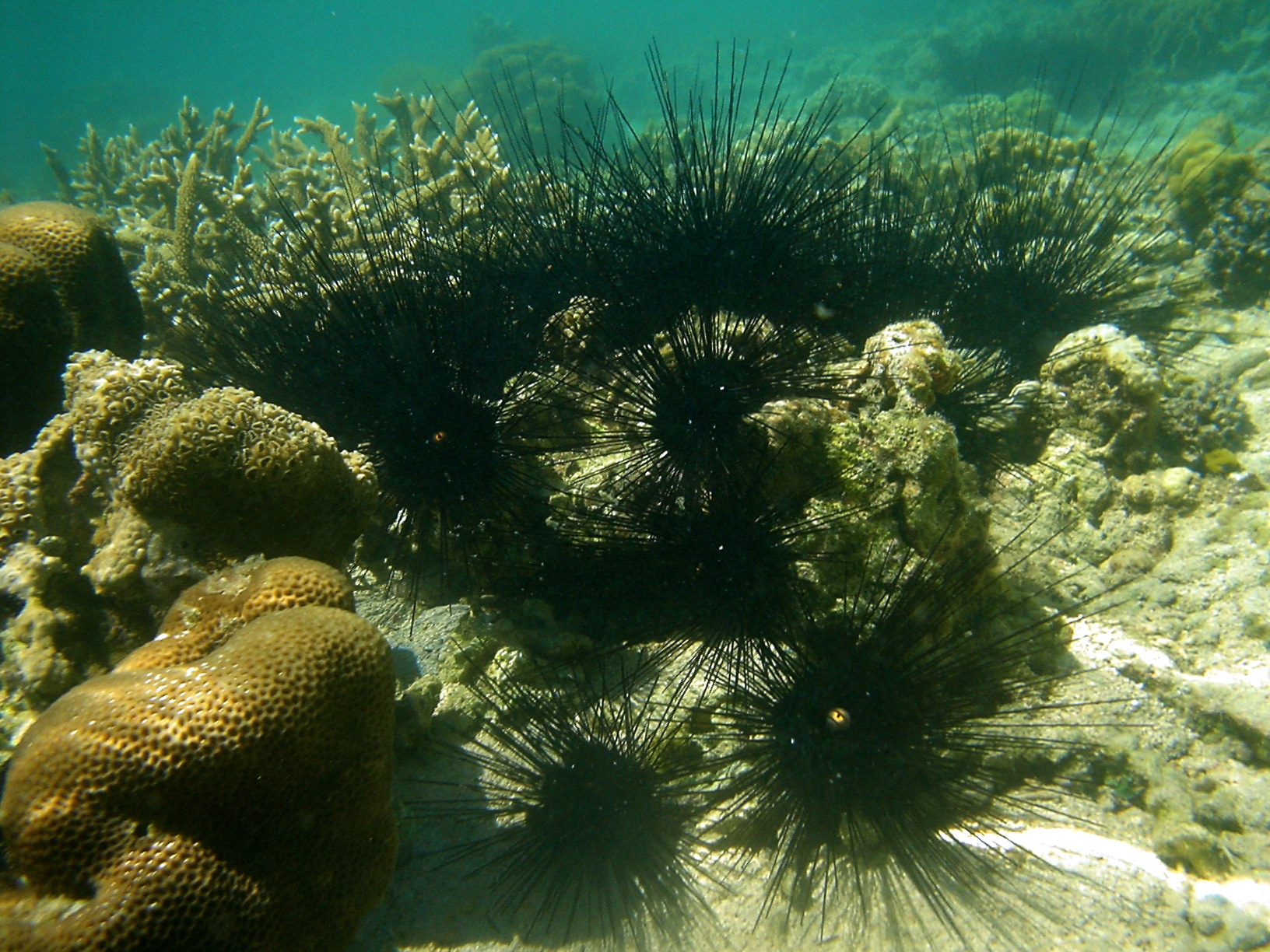
Urchins are herbivores that live on coral reefs. In the absence of predatory fish, urchins can become the dominant grazer on reefs and produce urchin barrens. Urchin barrens inhibit coral growth, because urchins erode calcium carbonate from living and dead corals eroding reef structure. When urchins are present at densities high enough that their erosion exceeds coral growth, urban barrens can form(Norström et al. 2009).
Urchin barren are the regime with most severe habitat complexity loss, which reduces habitat for other species. There is low production of fish, and the urchin populations are vulnerable to disease. However, urchin can be a valuable species when harvested, therefore urchin barrens can support an urchin harvest.
Drivers and causes of the regime shift
Coral regime shifts are driven by multiple drivers, including overfishing, pollution, disease, global warming and ocean acidification(Bellwood et al. 2004, Bruno et al. 2007, Mumby et al. 2007). The hard coral regime is more desirable than the other five regimes for most people, because of the inherent biological, social and economical importance of coral reefs.
All regime shifts from hard coral dominated to any of the alternative regimes are influenced by the same set of drivers. However, differences in the resulting regime are produced by contextual features or the ordering of events. For example, coral reef systems in the Indian Ocean are more likely to shift towards coralimorpharians, soft corals or sponges since algal grazing herbivores are more persistent than they are in the Caribbean, where macro-algae dominance is more common. The role of different drivers is relatively consistent across cases, but variation in their impact, timing and interaction likely produce different types of regime shifts in different regions.
Impacts on ecosystem services and human well-being
A regime shift from a coral reef to another regime results in a decline in multiple ecosystem services including coastal erosion regulation, fisheries, tourism, water cleansing, and calcium fixation(Moberg and Folke 1999). Coral reefs occupy less than 0.5% of ocean floor but sustain up to 25% of its biodiversity and produce at least 10% of fish consumed by humans(Moberg and Folke 1999). Alternative regimes do not support biodiversity or fish to the same extent. Constanza et al.(1997)estimated the value of coral reefs services at up to US$ 6 075 per hectare per year based on their contribution to disturbance regulation, waste treatment, biological control, refuge habitat, food production, raw materials, recreation and cultural values. Many of these services are lost or substantially reduced when regime shifts away from coral reefs occur.
Coral reef regime shifts can result in the collapse of coral fisheries that can produce unemployment for fishermen, and reduce the value of the fishery, as well as reduce food production. Recreational services (primarily based around diving and snorkelling) are diminished when regime shifts occur, causing losses estimated at up to AUS$ 682 million in the Great Barrier Reef and US$ 8.9 billion for the Caribbean, in addition to 350 000 jobs related in the Caribbean(Moberg and Folke 1999). Coral reefs support cultural and spiritual values such as religious rituals, cultural traditions and institutional frameworks for cooperative fishing, especially in small scale fishing communities(Moberg and Folke 1999).
Management options
Options for enhancing resilience
‘’The persistence of hard coral dominated reefscapes beyond 2050 will be heavily reliant on 2 things, the ability of corals to increase their upper thermal bleaching limits by ~0.1°C per decade, and management that produce local conditions that constrain excessive algal biomass proliferation during inter-disturbance intervals’’(Wooldridge et al. 2005).
Coral reef regime shifts are driven by local, regional and global drivers.
Given that temperature and acidification are global drivers that are difficult for local mangers to influence, Hoegh-Guldberg et al(2007)emphasize the management of the local level drivers. Due to the multi-causal nature of coral regime shifts, scholars emphasize the necessity of managing coral reefs using an ecosystem approach. Such an approach requires taking into account the interaction between land and sea, as well as the scale and origin of the stressors when making decisions at different scales of governance(Moberg and Folke 1999). Management programs which successfully address the improvement of water quality, reduction of sediments, nutrients, toxins, pathogens and fishing pressure will increase the likelihood of corals to recover to shocks like bleaching events(Wooldridge et al. 2005, Hoegh-Guldberg et al. 2007, Houk et al. 2010b).
Herbivore populations are a key driver that can be actively managed because reduced grazing increases the vulnerability to regime shifts(Mumby et al. 2007). For example, herbivorous fish like parrotfish can be protected. It has been suggested that markets should be transformed to incorporate a body of incentives to prevent the depletion of species in critical functional groups(Bellwood et al. 2004). The abundance of sea urchins should also be carefully managed because urchin dominance can produce negative effects on coral recruitment(Norström et al. 2009).
The spatial resilience of coral reefs is a regional driver that is possible to manage by managing connectivity, metapopulation dynamics, and to take into consideration the spatial distribution of coral reefs(Moberg and Folke 1999, Nyström and Folke 2001). This is because large-scale regional shifts are typically preceded by smaller-scale localized shifts. Therefore, monitoring the occurrence and spatial distribution of smaller-scale regime shifts may help to anticipate, and potentially avert, large-scale catastrophic shifts(Norström et al. 2009).
To manage spatial resilience, Bellwood et al.(2004)recommend increasing the rate of establishment and size of no-take areas, including ‘cool-spots’ of biodiversity. The reason is that areas with low species richness may be more vulnerable, as they may have lost functional groups, or may have low functional redundancy. Hence, minor changes in such ecosystems may trigger regime shifts locally, and erode spatial resilience regionally. International agreements are badly needed to keep oceans condition below the 480ppm and +2ºC thresholds for coral reefs(Hoegh-Guldberg et al. 2007).
Reducing pressure from global scale drivers, requires coordinated global action, but would substantially increase the resilience of coral reefs.
In-depth analysis
Feedback mechanisms
The feedbacks maintaining each regime can be defined by the competitive relationships among corals, macroalgae, coralimorpharians, soft corals, sponges and urchin barrens (local, proposed). Each regime reinforce itself by occupying space and consuming nutrients that then become inaccessible to other species groups.
Coral dominated reefs
Symbiosis with zooxanthellae feedback (local, well-established): The coral regime is reinforced by its symbiosis with zooxanthellae. Microscopic algae called zooxanthellae live inside the polyps. Corals receive food from the algae, which have the ability to photosynthesize. The algae also facilitate skeletal growth and provide corals with their color. In return, corals offer the algae nutrients (nitrogen, phosphorous and carbon dioxide) and protection from predators. When coral abundance is reduced by external disturbances, competitors may establish and restrict the ability of corals to regrowth.
Algae dominated reefs
Unpalatability feedback (local, well-established): If macroalgae reach certain size, it becomes unpalatable for herbivores (Scheffer et al. 2008, Hughes et al. 2010), creating a reinforcing feedback that favors further macroalgae recruitment.
Coralimorpharians, soft corals and sponge
Competition feedback (local, well-established): Coralimorpharians, soft corals and sponges are set of functional groups of species that usually compete with corals for space and resources. After strong disturbance events such as hurricanes, bleaching events, El Niño or La Niña events, low tides, disease outbreaks, oil pollution or euthropication that reduce coral populations, coral reefs are prone to be overgrown by its competitors.
Urchin barrens
Bioerosion feedback (local, well-established):The formation of urchin barrens usually happens in environments with low biodiversity and absence of predators. Urchin are herbivores in coral reefs, but when they form barrens, they may predate corals as well. The urchin barren regime is established when the bioerosion rate is higher than the reef accretion rate (Norström et al. 2009).
Drivers
Shift from Coral dominated reefs to alternative regimes
Important shocks (eg droughts, floods) that contribute to the regime shift include:
Thermal anomalies (regional, well-established): Thermal anomalies produce coral bleaching, a phenomena seen when corals release its zooxanthellae due to thermal stress, leading to the loss of coral color. If temperatures exceed summer maxima by 1º to 2ºC for over 3 weeks, then bleaching will occur, with more severe bleaching as thermal anomalies intensify and lengthen (Hoegh-Guldberg et al. 2007). Berkelmans et al. (2004) found that in the Great Barrier Reef, Australia, the maximum sea surface temperature (SST) over any 3 day period during the bleaching season (summer) predicted the presence/absence of bleaching with 73.2% accuracy. Massive events of coral bleaching have been recorded more recently (Berkelmans et al. 2004). According to model predictions, coral bleaching events are expected to become increasingly frequent and severe in the coming decades due to global warming (Wooldridge et al. 2005, Hoegh-Guldberg et al. 2007). Corals may survive and recover from bleaching after mild thermal stress, but typically show reduced growth, calcification, and fecundity and may experience greater incidences of coral disease (Bruno et al. 2007, Hoegh-Guldberg et al. 2007).
Hurricanes (regional, contested): Hurricanes are shock events that can destroy coral structure, reducing coral populations. These shocks can provide opportunities for algal populations to dominate over coral reefs, especially when these shocks occur in synergy with other drivers. However, hurricanes might also have a beneficial role when passing several hundred kilometers from coral reefs as they potentially cool down water from thermal anomalies (Eakin et al. 2010).
Coral disease outbreaks (local to regional, contested): Coral disease outbreaks may also act in synergy with other drivers by weakening coral’s resilience to other shocks. The same works the other way around. For example, warmer water temperature and nutrients inputs have been correlated with increase of disease outbreaks (e.g. white band syndrome)(Bruno et al. 2007, Houk et al. 2010a). However, in cases where disease probability is density dependent, outbreaks are less likely to happen. It depends on the disease dynamics, transmission patterns and contextual factors. This is why it is considered a contested driver.
Low tides (local, well-established): Low tides have been reported to induce mass coral mortality (Norström et al. 2009). They expose the coral to higher solar radiation, luminosity and temperature.
Oil spills (local, controversial): Oil spills reduce luminosity inhibiting photosynthesis, change the chemical composition of water, and may induce coral mortality directly by the effect of toxins or by affecting larvae survival and dispersal.
The main external direct drivers that contribute to the shift include:
Fishing (local, well-established): Overfishing reduces herbivory, leading to increasing macroalgal abundance due to reduced grazing (Mumby et al. 2007). Fishing can also reduce the diversity of herbivores. When coral cover is reduced there is increased colonization by algae, which in turn inhibits coral recruitment – i.e., a positive feedback exists (Mumby et al. 2007, Norström et al. 2009). When the abundance of fish is reduced, the ability to react to algal growth peaks is reduced as well, and mats of algae may establish and cover portions of a coral reef.
Atmospheric CO2 (Global, well-established): ocean acidification reduces the concentration of carbonate-ions in the oceans, which is a fundamental compound required for corals to grow. With less carbonate accretion corals cannot fix their skeletons, hence the coral reef structure will be reduced. Many coral are expected to be unable to cope with CO2 concentrations above 480ppm and temperature increase above +2ºC (Hoegh-Guldberg et al. 2007).
Global warming (Global, well-established): Global warming is expected to increase sea surface temperature, furthermore by increasing temperature it also increases CO2 concentration in water and therefore ocean acidification.
The main external indirect drivers that contribute to the shift?
Deforestation (regional, proposed): Deforestation increases the leakage of nutrients and runoff of sediments from soils to water bodies. Sedimentation and nutrients inputs are in turn a source of stress for coral reefs and by fertilizing algal populations stimulate algal growth while decreasing coral growth rates (Hoegh-Guldberg et al. 2007).
Urbanization (Local, proposed): Similar to deforestation, coastal development increase the amount of sewage on waterbodies, leading to more sedimentation and nutrient inputs, which stimulates algae at the expense of corals (Hoegh-Guldberg et al. 2007).
Food demand (Global, well-established): Food demand is a driver that stimulates fishing that in turn is a direct driver for coral degradation (SALVAT 1992). Market connectivity, trade facilities, government policies and development of technologies allow local fishermen to increase fishing effort (Deutsch et al. 2011).
Slow internal system changes that contribute to the regime shift include:
Herbivory (Local, well-established): Herbivores (mainly fish) control the growth of algae through grazing, scraping, and bioeroding (Nyström and Folke 2001). However, once algae grow beyond a certain size they become unpalatable to herbivores (Scheffer et al. 2008). If the abundance of fish is reduced, the ability to react to algal growth is reduced as well. Consequently, reduction in herbivore diversity and populations decreases the ability of herbivory to regulate temporary increases algal growth due to disturbance. Diseases key herbivore species (Nyström and Folke 2001) by reducing herbivory can initiate a positive feedback that can lock the system into an alternative regime dominated by macroalgae.
Connectivity loss (Regional, well-established): For all types of regime shifts described, there is a common pattern in regard to spatial resilience. Spatial connectivity is needed to allow larvae interchange, which increase genetic variability. Well-connected reefs are more resilient to disturbances. However, when connectivity is broken, corals rely on self-seeding and are more vulnerable to depletion of local stocks, bleaching events and other disturbances (Elmhirst et al. 2009, Hughes et al. 2010).
Summary of Drivers # Driver (Name) Type (Direct, Indirect, Internal, Shock) Scale (local, regional, global) Uncertainty (speculative, proposed, well-established) 1 Key thresholds
If temperatures exceed summer maxima by 1º to 2ºC for over 3 weeks, then bleaching will occur, with more sever bleaching as thermal anomalies intensify and lengthen (Hoegh-Guldberg et al. 2007)
Coral reef is expected to be lost if carbon dioxide exceeds 480ppm and temperature increase +2ºC (Hoegh-Guldberg et al. 2007)
Summary of Ecosystem Service impacts on different User Groups References (if available) Provisioning Services Freshwater Food Crops Feed, Fuel and Fibre Crops Livestock Fisheries Wild Food & Products Timber Woodfuel Hydropower Regulating Services Air Quality Regulation Climate Regulation Water Purification Soil Erosion Regulation Pest & Disease Regulation Pollination Protection against Natural Hazards Cultural Services Recreation Aesthetic Values Cognitive & Educational Spiritual & Inspirational
Categorical summary
Impacts
Ecosystem type:’
- Marine & coastal
Key ecosystem processes:
- Soil formation
Biodiversity:
- Biodiversity
Provisioning services:
- Fisheries
- Wild animal and plant products
Regulating services:
- Water purification
- Regulation of soil erosion
- Pest & disease regulation
- Natural hazard regulation
Cultural services:
- Recreation
- Aesthetic values
- Knowledge and educational values
- Spiritual and religious
Human well-being:
- Food and nutrition or Livelihoods and economic activity or Security of housing & infrastructure or Cultural or Aesthetic and recreational values
Links to other regime shifts:
- Freshwater eutrophication
- Forest to savanna
- Fisheries collapse
Drivers
Key drivers:
- Harvest and resource consumption or External inputs (e.g. fertilizers or pest control or irrigation) or Adoption of new technology (e.g. new fishing nets) or Species introduction or removal or Disease or Soil erosion & land degradation or Environmental shocks (e.g. fire or floods or droughts) or Global climate change
Land use:
- Fisheries or Conservation or Tourism
Key attributes
Spatial scale:
- Local/landscape (e.g. lake or catchment or community)
Time scale:
- Years
Reversibility:
- Hysteretic (difficult to reverse)
Evidence:
- Models
- Paleo-observation
- Contemporary observations
- Experiments
Confidence: existence of the regime shift
- Well established – Wide agreement in the literature that the RS exists
Confidence: mechanisms underlying the regime shift
- Well established – Wide agreement on the underlying mechanism
References
References old [Delete]
- Bellwood, D., T. Hughes, C. Folke, and M. Nyström. 2004. Confronting the coral reef crisis. Nature 429:827-833.
- Bruno, J. F., H. Sweatman, W. F. Precht, E. R. Selig, and V. G. W. Schutte. 2009. Assessing evidence of phase shifts from coral to macroalgal dominance on coral reefs. Ecology 90:1478-1484.
- Bruno, J., E. Selig, K. Casey, C. Page, B. Willis, C. Harvell, H. Sweatman, and A. Melendy. 2007. Thermal stress and coral cover as drivers of coral disease outbreaks. Plos Biol 5:e124.
- Costanza, R., R. dArge, R. deGroot, S. Farber, M. Grasso, B. Hannon, K. Limburg, S. Naeem, R. V. Oneill, J. Paruelo, R. G. Raskin, P. Sutton, and M. vandenBelt. 1997. The value of the world’s ecosystem services and natural capital. Nature 387:253-260
- Elmhirst, T., S. R. Connolly, and T. P. Hughes. 2009. Connectivity, regime shifts and the resilience of coral reefs. Coral Reefs 28:949-957.
- Goreau, T. and R. Hayes. 1994. Coral bleaching and ocean’’ hot spots’’. Ambio:176-180.
- Hoegh-Guldberg, O., P. Mumby, A. Hooten, R. Steneck, P. Greenfield, E. Gomez, C. Harvell, P. Sale, A. Edwards, K. Caldeira, N. Knowlton, C. Eakin, R. Iglesias-Prieto, N. Muthiga, R. Bradbury, A. Dubi, and M. Hatziolos. 2007. Coral reefs under rapid climate change and ocean acidification. Science 318:1737-1742.
- Hughes, T., N. Graham, J. Jackson, P. Mumby, and R. Steneck. 2010. Rising to the challenge of sustaining coral reef resilience. Trends in Ecology & Evolution.
- Moberg, F. and C. Folke. 1999. Ecological goods and services of coral reef ecosystems. Ecological Economics 29:215-233.
- Mumby, P. J., A. Hastings, and H. J. Edwards. 2007. Thresholds and the resilience of Caribbean coral reefs. Nature 450:98-101.
- Norström, A., M. Nyström, J. Lokrantz, and C. Folke. 2009. Alternative states on coral reefs: beyond coral–macroalgal phase shifts. Mar. Ecol. Prog. Ser. 376:295-306.
- Nyström, M. and C. Folke. 2001. Spatial resilience of coral reefs. Ecosystems 4:406-417.
- Scheffer, M., E. H. Nes, M. Holmgren, and T. Hughes. 2008. Pulse-Driven Loss of Top-Down Control: The Critical-Rate Hypothesis. Ecosystems 11:226-237.
Citation
Acknowledge this review as:
Juan Carlos Rocha, Reinette (Oonsie) Biggs, Garry Peterson, Albert Norström. Coral transitions. In: Regime Shift Database, www.regimeshifts.org. Last revised: 2011-02-25BibTeX citation:
@misc{
  author = {Juan Carlos RochaReinette (Oonsie) Biggs and Garry Peterson and Albert Norström},
  title = {Coral transitions},
  url = {www.regimeshifts.org},
  howpublished = {Regime Shifts Database},
  publisher = {Stockholm Resilience Centre},
  institution = {Stockholm University}
}
This work is licensed under CC BY-NC-SA 4.0


 . It is an initiative lead by the Stockholm Resilience Centre. The website was developed by Juan Rocha and build with Rmarkdown.